Rethinking coastal authority in Nova Scotia: We all share the coast—so let’s share its governance!
Part 3: How do we move forward?
Author: Myles De Jong. Research Assistant. International Development Studies BA program, Dalhousie University (2021-2025).
While the shortcomings of Nova Scotia’s coastal governance system may be complicated to address, lessons can be drawn from alternative models that have already shown promise in addressing similar conflicts—both in Canada and abroad.
The common thread among these models is an emphasis on inclusive, bottom-up governance, where those most affected by decisions play an active role in shaping them. On paper, this sounds simple: involve local people in local decisions. In practice, however, there is an important distinction between stakeholder engagement and true participatory processes.
Historically, engagement in Nova Scotia has meant things like town halls, consultation surveys, or requests for public support on pre-determined coastal legislation. But too often these result in tokenistic exercises, allowing governments to claim community involvement while the real decisions are made elsewhere.1 This box-ticking approach leaves people feeling unheard, deepens mistrust, and even perpetuates systemic inequities such as environmental racism.2
Environmental racism: the reproduction of race-based discrimination through the impacts of environmental damages, as well as exclusion from the decision-making processes that cause them.
In fact, African Nova Scotians have already explicitly stated their concerns about environmental racism along the coast. According to the ENRICH Project—a research program oriented towards climate justice for African Nova Scotians—inclusive decision-making, community empowerment, and capacity building should all be priorities for the government in order to avoid the kind of systemic marginalization that has characterized its governance models in the past.
Truly participatory processes go much further. They involve communities, Indigenous Nations, conservation groups, and other stakeholders in every stage of decision-making—from setting priorities and exploring options to implementing actions and reviewing results. These processes are iterative, unfolding over multiple phases, and focus on building the skills, relationships, and trust needed for everyone’s voice to carry real weight. 3 Done well, they bring together a diversity of stakeholders—each with their own values, knowledge systems, and lived experiences—who share responsibility for both the process and its outcomes. The result is not only more equitable management of the coast, but an approach that people are far more likely to buy into and remain committed to over time.
But even the best-intentioned participatory processes can fail if they overlook practical and structural barriers. Time, resources, and trust all matter. When participation is unpaid or logistically inaccessible, it effectively excludes those without the means to attend. On the other hand, when processes are designed with these realities in mind—by compensating participants for their time, ensuring meetings are culturally and geographically accessible, and fostering trust and continuity with government officials—participation becomes more equitable and the resulting decisions more legitimate.4
While this can be difficult to implement in the real world, there are examples—nationally and globally—which show what’s possible when participation is meaningful and leadership is shared:
Marine Protected Area Network (MPAN), British Columbia, Canada
Between 2015 and 2023, federal, provincial, and Indigenous governments worked alongside commercial fishers, environmental groups, tourism operators, and scientists to design a network of Marine Protected Areas that balanced ecological goals with socio-cultural and economic needs.5 This co-management approach ensured that local expertise complemented scientific assessments; that Indigenous stewardship principles were embedded in the network’s design; and that those affected by the MPAs shared both the responsibility and the benefits of their protection.6New management positions were even established so that First Nations representatives were employed in paid positions across all stages of the process, removing some of the financial barriers to participation in coastal governance.7
Marine and Coastal Area’s for Indigenous Peoples (MCAIP), Chile
Chile’s MCAIP provides a pathway for Indigenous communities to apply to manage marine and coastal spaces traditionally used for cultural and livelihood purposes. Once approved, the community leads all planning, rule-setting, and enforcement in the area, often in partnership with scientists and conservation agencies.8
Since the policy’s adoption, researchers have found evidence that MCAIP status has helped shift unequal power dynamics, restore marine habitats, promote community tourism, and reinforce cultural identity in coastal regions9—a powerful case for how formal recognition of Indigenous leadership can lead to more effective coastal governance.
Furthermore, it is important to note that communities in Nova Scotia have long been willing to step up. Coastal users and residents have a documented history of organizing, consulting, and even implementing their own changes in Nova Scotia since the 1990s.10 Yet structural issues in governance—jurisdictional fragmentation, exclusion of Indigenous voices, and state dominance—still prevent those efforts from shaping real outcomes
This brings us back to the question: what role can each of us play in shaping the future of our coast? Given the challenges we face, relying on fragmented, non-inclusive consultations that exclude genuine community leadership won’t work; at some point, we must question the viability of the current governance model and push for broader, more inclusive coastal justice.

Coastal justice means making sure that access, benefits, and responsibilities are shared fairly. It means recognizing that decisions about the coast aren’t just technical or legal, they’re moral, cultural, and deeply personal. And it means ensuring that the voices of those most connected to the coast—whether through fishing, ceremony, science, or daily recreation—are heard and respected.
Whether that be through community co-management, Indigenous leadership, or another governance model that has yet to be explored, it is clear that there must be, at the very least, an open discussion about who should have decision-making power over the coast.
And while that is a conversation which no single person can be responsible for, it doesn’t mean individuals can’t make a difference—we just need to focus our energy where it counts most:
- Ask critical questions: Who’s making the decisions? Whose voices are missing? How will this affect those not represented here?
- Advocate for power-sharing: Support locally-led and co-managed initiatives.
- Challenge tokenism: Learn to recognize the difference between box-ticking consultations and true participatory processes.
- Push for systemic reform: Encourage policies that create equitable, accessible, and well-resourced participation—not just more meetings.
Nova Scotia’s coast is a shared space. So let’s share its governance.
This publication is the result of a collaboration between the Ecology Action Centre and Climate Justice: Values and Vulnerability.
References
- Rockloff, S. F., & Lockie, S. (2006). Democratization of Coastal Zone Decision Making for Indigenous Australians: Insights from Stakeholder Analysis. Coastal Management, 34(3), 251–266. https://doi.org/10.1080/08920750600686653 ↩︎
- The ENRICH Project. https://www.enrichproject.org/ ↩︎
- Bremer, S., & Glavovic, B. (2013). Exploring the science–policy interface for Integrated Coastal Management in New Zealand. Ocean & Coastal Management, 84, 107–118. https://doi.org/10.1016/j.ocecoaman.2013.08.008 ↩︎
- Warrior, M., Fanning, L., & Metaxas, A. (2022). Indigenous peoples and marine protected area governance: A Mi’kmaq and Atlantic Canada case study. FACETS, 7, 1298–1327. https://doi.org/10.1139/facets-2021-0128 ↩︎
- Watson, M. S., Jackson, A.-M., Lloyd-Smith, G., & Hepburn, C. D. (2021). Comparing the Marine Protected Area Network Planning Process in British Columbia, Canada and New Zealand – Planning for cooperative partnerships with Indigenous communities. Marine Policy, 125. https://doi.org/10.1016/j.marpol.2020.104386 ↩︎
- Beaty, F., Brown, K. H. T., Braun, J., Diggon, S., Hartley, E., Heidt, A., Maddin, H., Maloney, A., Martone, R., McDougall, C., Reid, M., Robb, C., Rubidge, E., Short, C., & Worsley, K. (2024). From design to implementation: Lessons from planning the first marine protected area network in Canada. Marine Policy, 170. https://doi.org/10.1016/j.marpol.2024.106360 ↩︎
- Watson, M. S., Jackson, A.-M., Lloyd-Smith, G., & Hepburn, C. D. (2021). Comparing the Marine Protected Area Network Planning Process in British Columbia, Canada and New Zealand – Planning for cooperative partnerships with Indigenous communities. Marine Policy, 125. https://doi.org/10.1016/j.marpol.2020.104386 ↩︎
- Hiriart-Bertrand, L. (2020). Challenges and opportunities of implementing the marine and coastal areas for indigenous peoples policy in Chile. Ocean and Coastal Management, 193. https://doi.org/10.1016/j.ocecoaman.2020.105233 ↩︎
- Carrasco-Bahamonde, D., Casellas, A., & Araos, F. (2025). Getting our sea back: Indigenous governance and biocultural conservation of coastal and marine commons. Marine Policy, 178. https://doi.org/10.1016/j.marpol.2025.106705 ↩︎
- Wilson, L., & Wiber, M. G. (2009). Community perspectives on integrated coastal management: Voices from the Annapolis Basin area, Nova Scotia, Canada. Ocean & Coastal Management, 52(11), 559–567. https://doi.org/10.1016/j.ocecoaman.2009.08.008 ↩︎
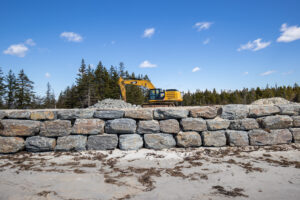
Featured image: Prospect Village during winter, Halifax Regional Municipality. Nicolas Winkle Photography (NWP), 2024